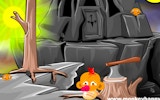
Snail Puzzle Journey

Snail Puzzle Journey

Wire Shift Digital
Puzzle Casual Relaxing

Reviews

Snail Puzzle Journey stands out for what it removes: no countdown, no combat, and no complicated rule set. The tap-to-move, release-to-stop mechanic keeps every level readable, while moving platforms and friendly creatures add variety without turning the game into a reflex test. Its main limitation is that the available description does not detail level count, scoring, or replay features, so players seeking deep progression should set expectations accordingly. It is best suited to casual players and families who want a gentle, single-player puzzle.

About This Game

A Gentle Tap-and-Release Mechanic

Snail Puzzle Journey is built around a single, readable interaction: tap or click to send the snail forward, release to stop it. That simplicity hides the real challenge, which is timing. Rocks and gaps punish a careless tap, so each level becomes a short exercise in watching the path and choosing the exact moment to move and halt. The mechanic is easy to explain and easy to demonstrate, which is why younger players can join without a tutorial.

Level Goals and Obstacle Variety

Every stage gives the snail one clear objective, such as reaching a flower or gathering shiny objects. Early levels keep the route open, while later ones introduce moving platforms and friendly creatures that change the rhythm of a run. These additions do not raise the difficulty through speed; they raise it by asking you to read a pattern before you commit to a tap. Because there is no timer, a mistake costs only the seconds you spend repositioning.

Who This Pace Suits

The absence of a countdown, combat, or complex rules makes Snail Puzzle Journey a natural fit for short breaks and for players who prefer problem-solving over reflex tests. The colorful presentation and non-violent themes keep the tone light, and the single-player structure means progress depends only on your own timing. If you want a puzzle game that rewards patience rather than speed, this one is designed around that preference.


Editorial Notes

Compatibility

✅ Works on PC & Mobile | Recommended: Chrome / Safari / Edge

Faq

Does Snail Puzzle Journey have a time limit on its levels?
No. The game is designed without a timer, so you can pause, observe the path, and plan each tap. That design choice supports the relaxing tone described in the game's own materials and makes the experience approachable for players who dislike countdown pressure.
What is the main goal in each level of Snail Puzzle Journey?
Each level sets a simple objective, such as reaching a flower or collecting shiny objects. You move the snail toward that goal while avoiding rocks and gaps. The objective stays visible and straightforward, so the challenge comes from timing rather than from figuring out what to do.
Can younger children play Snail Puzzle Journey?
The controls are limited to tapping or clicking to move and releasing to stop, which is simple enough for young players to learn quickly. The content is described as family-friendly and non-violent, with no complex rules. Adult supervision is still reasonable for any online game, but the mechanics themselves are not demanding.
What new elements appear as you progress in Snail Puzzle Journey?
Later levels introduce moving platforms and friendly creatures. These elements add variety without adding time pressure. Moving platforms require you to time your stop so the snail lands safely, while friendly creatures change the pace or pattern of a route. The game does not rely on speed to increase difficulty.
Is Snail Puzzle Journey a multiplayer game?
The game is listed as single player, so there is no multiplayer mode described in the available information. Progress and puzzle-solving happen on your own. If you are looking for a shared or competitive experience, this title is not presented as offering one.
What is the best way to improve at Snail Puzzle Journey?
Because there is no timer, the most effective approach is to watch the full path before tapping, then practice stopping precisely. Experimenting with different movement speeds helps with moving platforms. Focusing on steady timing rather than rushing tends to produce better results in this type of puzzle.

Comments

0 comments
U
User
★ ★ ★ ★ ★
Loading comments...