
Track Design and Environment
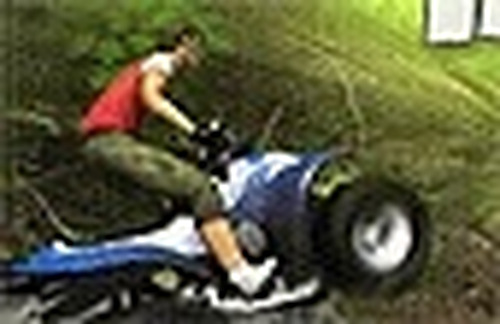
The jungle setting in Wild Terrain Quad Challenge is more than a backdrop. Each course weaves through thick vegetation, with tight turns around massive tree trunks and steep climbs over rocky inclines. Mud pits slow down vehicles that stray from the optimal path, while shallow streams require careful throttle control. The visual design emphasizes natural beauty without any intense or frightening elements, making it suitable for younger players. Courses become progressively more complex, introducing new obstacle types that demand different driving approaches.
Vehicle Selection and Handling
Before each race, players choose from a lineup of quad bikes that vary in acceleration, top speed, and stability. A lighter model might zip through straightaways but struggles on uneven ground. Heavier options provide better traction on slippery surfaces but require more distance to reach full speed. This selection process encourages strategic thinking about the upcoming track's characteristics. The handling model is forgiving enough for beginners yet offers enough nuance for experienced players to shave seconds off their times.
Progression and Skill Development
Completing a course unlocks the next one, creating a clear sense of advancement. Early tracks serve as tutorials, teaching basic steering and obstacle avoidance. Later stages introduce tighter corridors and more frequent hazards, testing the player's ability to read the terrain ahead. There is no penalty for retrying a level, which promotes practice and gradual improvement. The difficulty curve feels natural, with each new challenge building on skills learned in previous races.
Family-Friendly Design Philosophy
Wild Terrain Quad Challenge avoids any content that could be considered mature or inappropriate. There are no crashes showing damage, no competitive pressure from opponents, and no time limits that cause frustration. The focus remains on the joy of driving through a vibrant environment and the personal satisfaction of mastering a difficult section. This approach makes the game accessible to players of all ages who simply want a relaxing yet engaging driving experience.
Controls and Accessibility
The control scheme uses either keyboard arrows or on-screen buttons, depending on the platform. Steering is responsive without being twitchy, allowing precise navigation through narrow gaps. Acceleration and braking are clearly mapped, and there is no complex combination of inputs to remember. This simplicity ensures that players can focus on the track ahead rather than struggling with the interface. The game also includes visual cues for upcoming hazards, helping players anticipate and react.








Comments
0 comments